
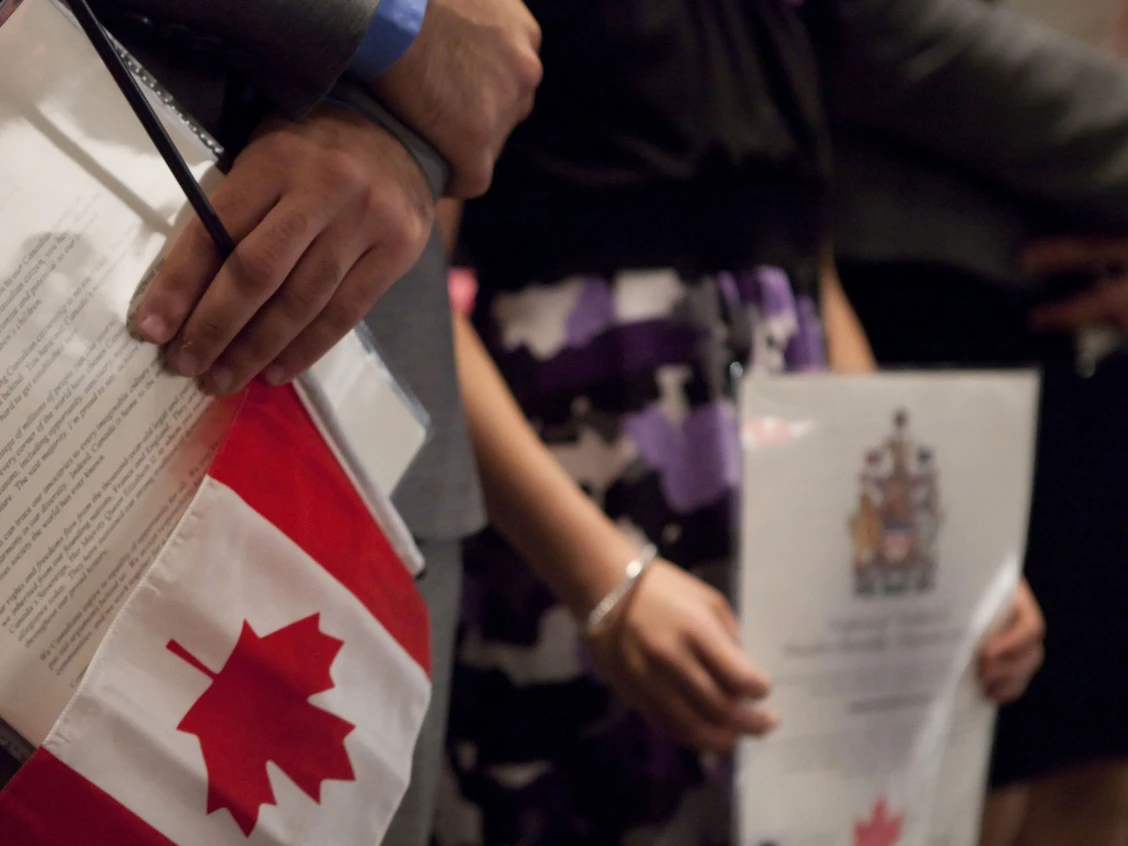
More Americans are looking into their Canadian family roots as interest in Canadian citizenship certificates continues to grow. Since changes to Canada’s citizenship law came into effect in December 2025, the federal government has seen a noticeable increase in applications, with people in the United States making up a significant share of those requests.
The change comes from Bill C-3, often referred to as the “Lost Canadians Act.” The new rules expanded citizenship eligibility for people who can prove they have a direct Canadian-born ancestor, even if that connection goes back several generations.
The impact has been especially noticeable in the United States. According to data from Immigration, Refugees and Citizenship Canada (IRCC), the government received about 8,900 proof-of-citizenship applications in January 2026, compared with 5,940 during the same month a year earlier. That represents an increase of almost 50 per cent. Of the January applications, about 2,470 came from the U.S., making Americans the largest group of applicants.
The number of people actually receiving citizenship certificates has also been climbing. Data obtained by CBC showed that the number of certificates issued increased by nearly 50 per cent between April 1 and May 31. Between mid-December and the end of May, 3,110 people born in the United States had qualified for Canadian citizenship certificates under Bill C-3. Americans now account for almost half of those who have been recognized during that period.
A Growing Backlog
The sudden increase in applications has put significant pressure on Canada’s citizenship processing system. Earlier in the year, applicants were already being warned about long waits. What was once expected to take around a year has now stretched much further.
According to IRCC’s latest processing information, applicants may now face a wait of up to 25 months, with an estimated 121,800 applications waiting for a decision.
The increase in applications is not the only reason for the growing backlog. Earlier this year, IRCC also reviewed a number of citizenship certificates that had already been issued because of concerns about supporting documentation. Around 100 certificates were flagged for review, and 67 were ultimately suspended. Processing later resumed, but the additional review added another layer of pressure to an already busy system.
Americans Are Digging Into Their Family History
The new citizenship rules have also created a surge in interest among genealogists, archivists and historical organizations. Americans trying to establish a Canadian connection are turning to archives to find birth records, marriage certificates and other documents that can prove their family history.
The National Library and Archives of Québec, for example, reported an unusually high number of requests from Americans after Bill C-3 came into effect. In March 2026 alone, the organization received around 1,500 requests, compared with just 43 during the same month the previous year.
Other archives are seeing similar demand. Nova Scotia Archives has warned visitors that its response times have increased because of the unusually large number of requests. At the University of Maine at Fort Kent’s Acadian Archives, director Patrick Lacroix said he had already received around 100 inquiries during the year, putting the institution on track to receive more than twice as many requests as it did throughout all of 2025.
For many families, the process is essentially a search through generations of history. A name on an old birth certificate or a forgotten connection to a Canadian town could now become the key piece of evidence needed to establish citizenship.
Why the Change Matters
Canada’s decision to expand citizenship eligibility comes at a time when several countries are moving in the opposite direction. Governments in different parts of the world have been making citizenship rules more restrictive, often requiring longer periods of residence or stronger ties to the country.
Sweden, for example, introduced new rules in June that increased the residency requirement for citizenship from five years to eight. Finland made a similar change in 2024, with greater emphasis on long-term residence and language skills. Italy also tightened its citizenship rules last year, limiting eligibility for descendants to those with an Italian-born parent or grandparent, where there had previously been no generational limit.
Canada’s approach under Bill C-3 therefore stands out. Instead of narrowing the connection between citizenship and ancestry, the new rules have opened the door for more people with Canadian family roots to make a claim.
A Rush to Rediscover Canadian Roots
For thousands of Americans, the changes have created a new reason to explore their family history. Some may be discovering for the first time that a parent, grandparent or distant ancestor was born in Canada.
But the growing interest has also exposed a challenge: Canada’s processing system is struggling to keep pace.
As applications continue to arrive and more people turn to archives for proof of their ancestry, the demand is unlikely to disappear quickly. For now, anyone hoping to claim citizenship through family history may need plenty of patience – and, in many cases, a willingness to dig deep into the past to find the documents that connect their family to Canada.